The Wheel Strategy Course: CSPs, Covered Calls, Rolling & Assignment — Interactive
We've written about the wheel before — the strategy itself, and the tracker that keeps its cost basis honest. This post is different: it's the wheel as a course.
The Wheel is level four of the Options School, and every lesson comes with a builder that prices the decision live. The four mini apps below are the real course widgets. If you've ever nodded along to "sell puts, get assigned, sell calls" without feeling the numbers, this is the fastest way to fix that.
Step One: The Cash-Secured Put
A cash-secured put is a buy limit order the market pays you to place. You collect premium up front for promising to buy 100 shares at the strike, with the full strike × 100 parked in cash — so assignment is a plan, not a margin call.
Strike selection is odds selection, and delta is the dial: a 10-delta put gets assigned roughly one time in ten; an at-the-money put is close to a coin flip. More yield always buys more assignment odds.
Feel the trade-off in the builder from the Cash-secured puts lesson — drag the strike, days, and IV, and watch premium, yield-on-cash, and assignment odds move together:
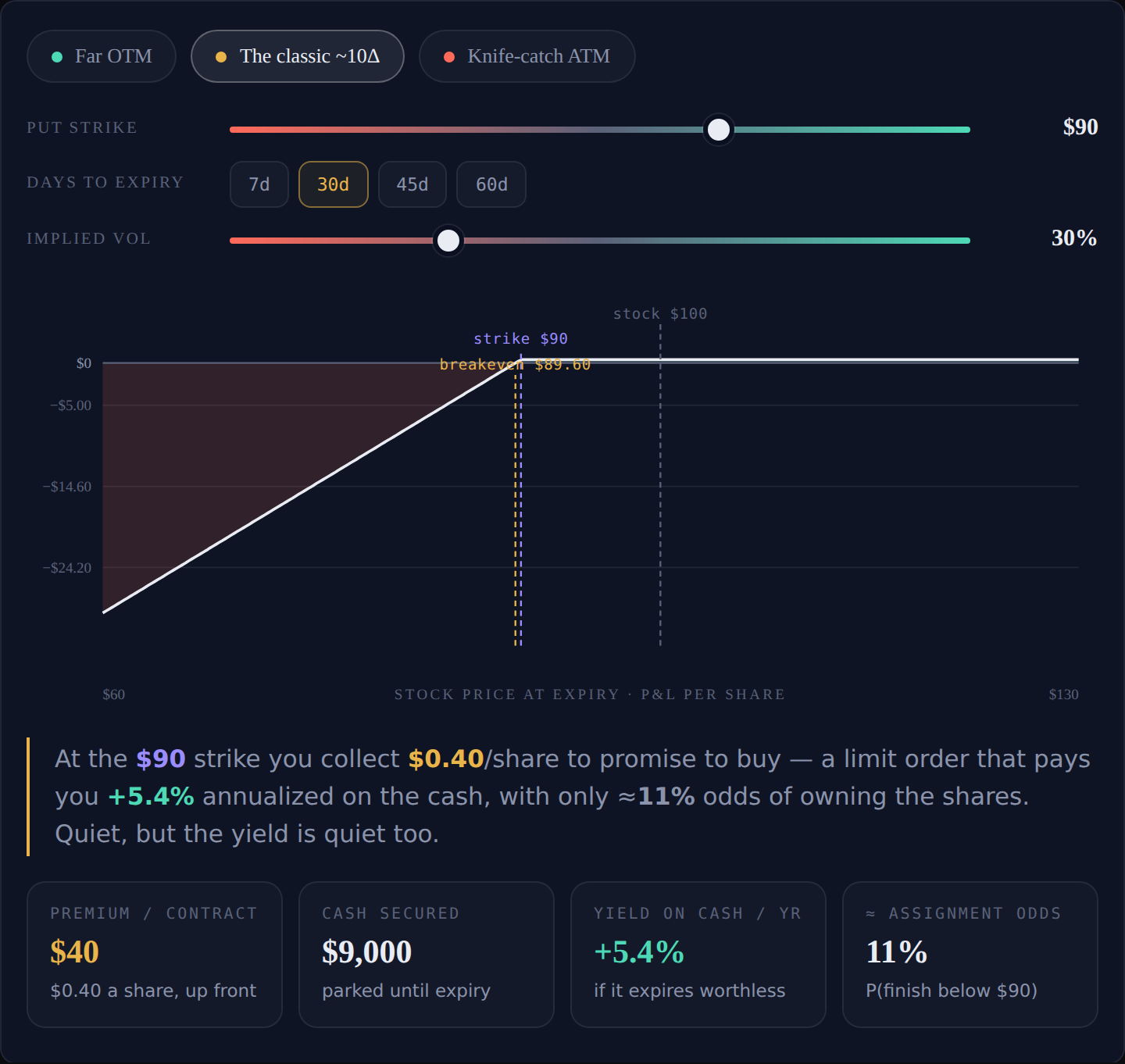
The fine print is the negative skew from the skew lesson: capped premium upside against a downside that runs nearly to zero. The wheel's first filter is absolute — only stocks you want, at strikes you'd pay, in sizes you can wear.
Step Two: The Covered Call
Assigned? Now you own 100 shares, and the covered call rents them out: sell someone the right to buy your shares at the strike, pocket the premium today.
The critical rule: the strike is chosen against your cost basis, not the stock price. Sell a call below your basis and assignment converts a paper loss into a guaranteed one — the wheel's most common self-inflicted wound.
The builder from the Covered calls lesson prices the call live from your basis and flips its readout red the moment a strike would lock in a loss:
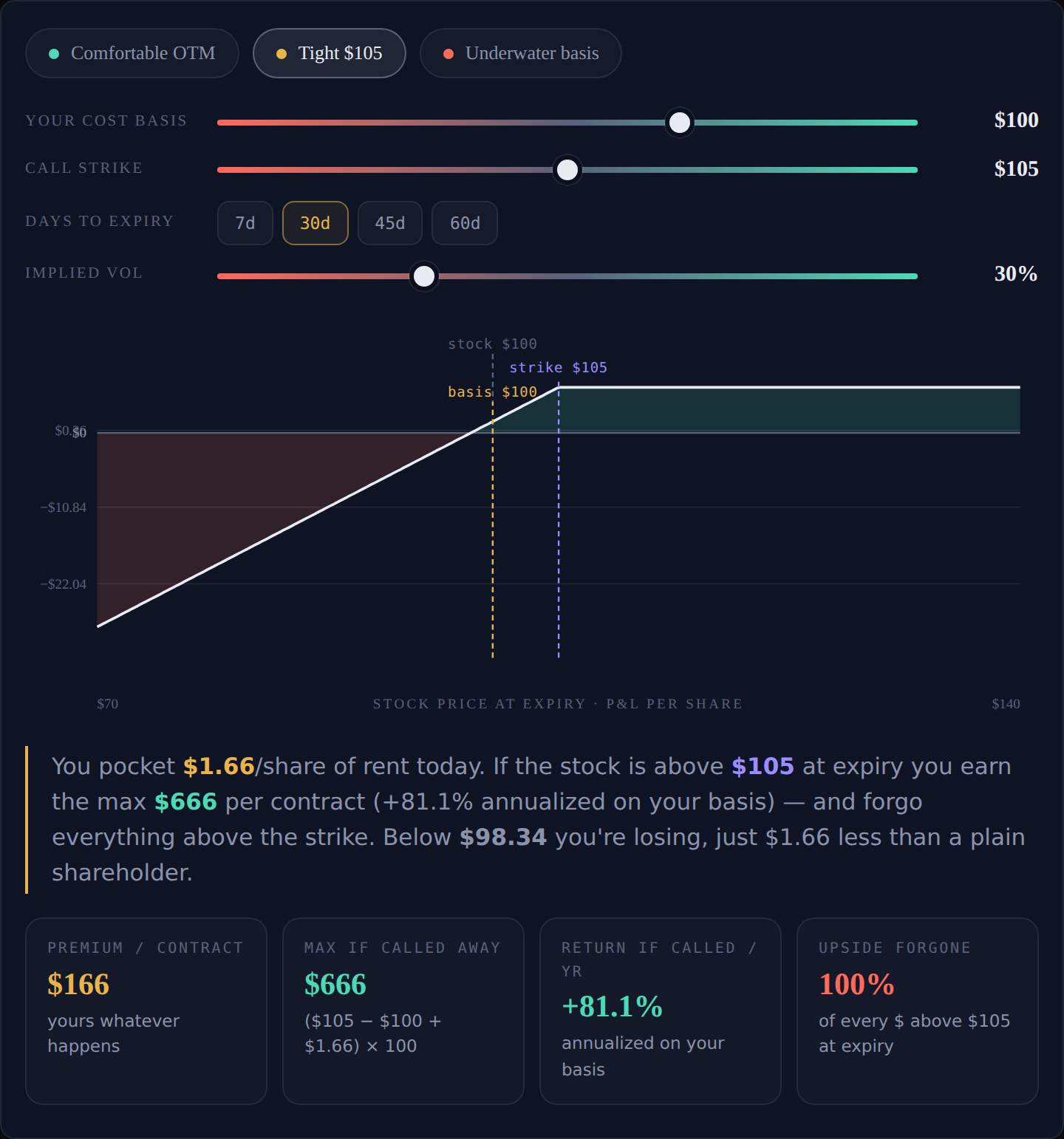
Watch the return-if-called number as you move the strike. That's the same math our covered call grader runs on live chains — here you get to see why the grade moves.
Step Three: The Roll Decision
A roll is two trades stapled together: buy back the short option you're losing on — that loss is real the moment you pay it — and sell a new one at a later expiry. The only new value a roll ever harvests is the fresh extrinsic you sell.
The scoreboard is one number: net credit. Just after a breach, rolling out 30 days collects real money and buying $5 of strike improvement costs about fifty cents. Deep underwater, both rolls go to a debit — a put $17 in the money has no extrinsic left to sell. Rolls are cheap early and impossible late.
The roll decider from the Rolling lesson prices all three choices — roll out, roll out-and-down, take assignment — honestly, with Black–Scholes:
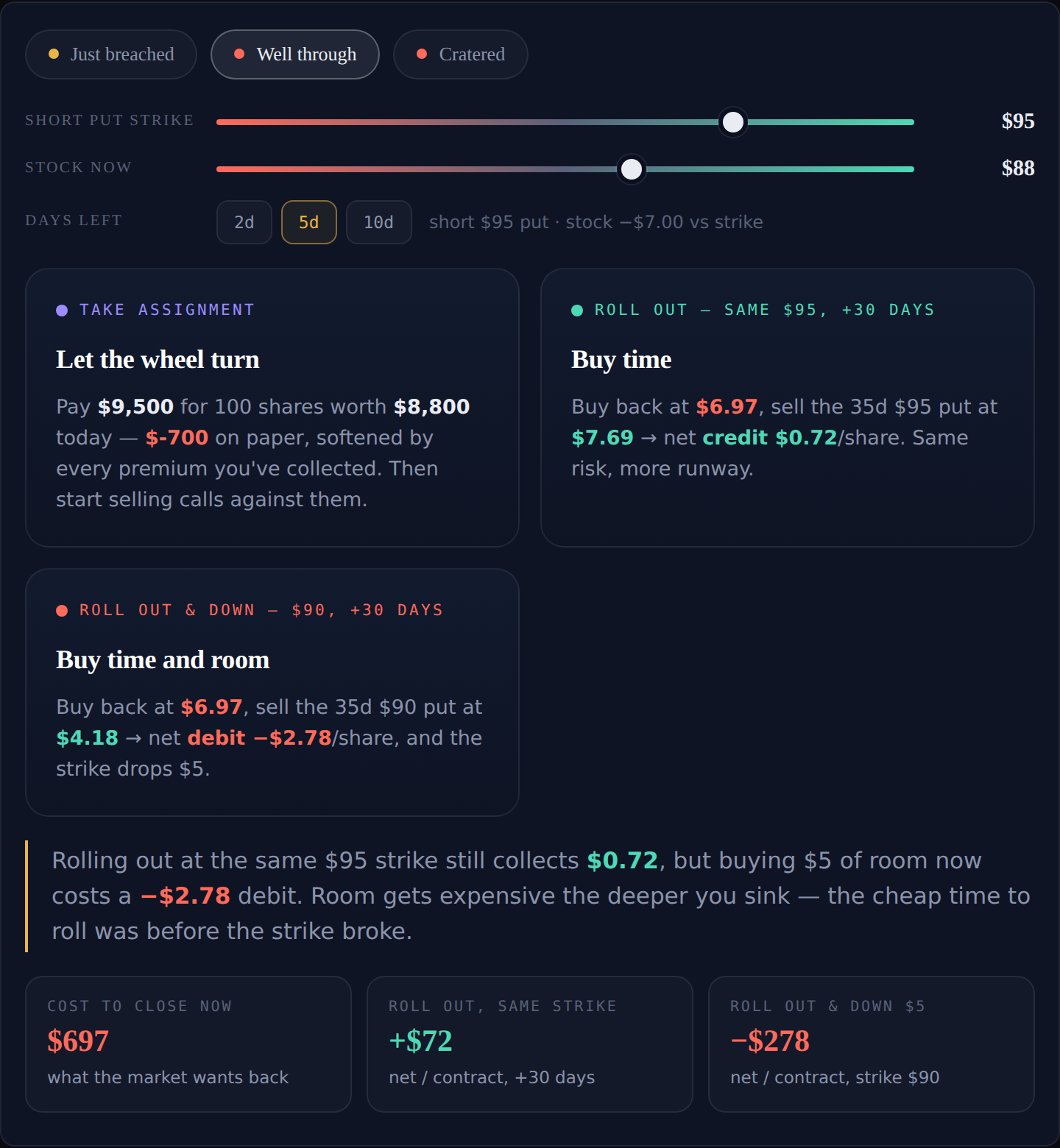
A debit roll at the same strike is paying to postpone being wrong. The one honest exception: a small debit for a much better strike is explicitly buying risk reduction.
The Full Cycle
Put the three decisions together and you get the wheel: cash → cash-secured put → assignment → shares → covered call → called away → cash again. The accounting collapses to one running number: adjusted cost basis = assignment price minus every premium collected, puts and calls alike.
Spin it yourself — the cycle diagram from the Assignment mechanics lesson walks the full loop with a live ledger showing the basis grinding lower each turn:
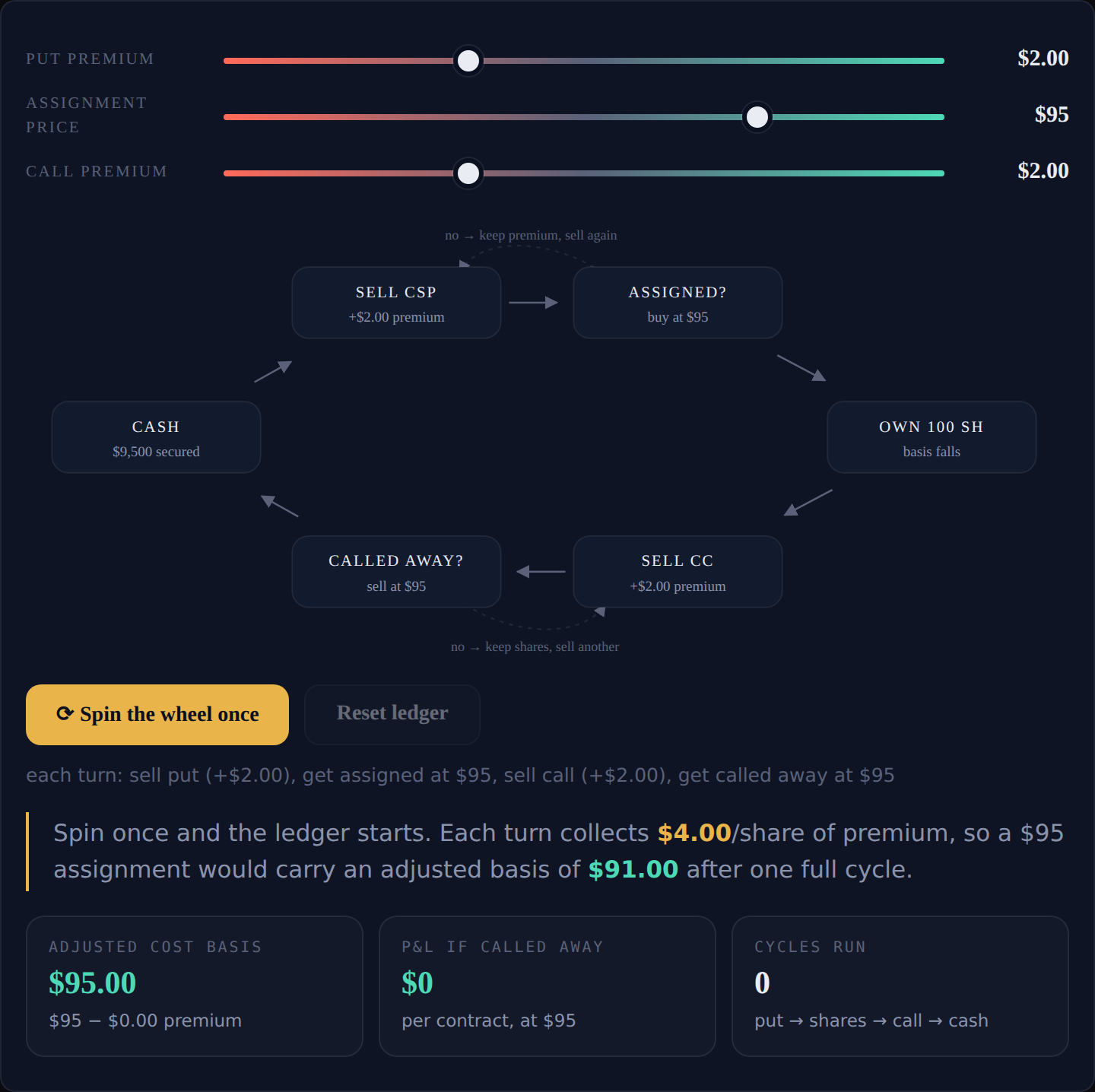
Judge the campaign, not the leg: a call-away at $95 against a $91 basis is a +$400 campaign regardless of what the final call did. That campaign-level view is exactly what the Wheel Tracker automates on your real trades.
Take the Full Course
The Wheel course covers each step with full prose, quizzes, and the assignment mechanics most guides skip (the OCC lottery, early-assignment triggers, dividend risk):
- Cash-secured puts — get paid to set a buy limit
- Covered calls — rent, basis, and the red-flag strike
- Rolling — credit vs debit, and when to stop
- Assignment mechanics — what actually hits your account
Then run it for real: grade your next put with the setup grader, and let the Wheel Tracker keep one honest adjusted basis per campaign.